This is the most well-established benefit. Dozens of studies have looked at walnuts and cardiovascular health.
What the research says: A 2018 meta-analysis of 26 clinical trials found that walnut-rich diets significantly reduced total cholesterol (by about 3-5%) and LDL “bad” cholesterol (by about 4-6%). The effect was strongest when walnuts replaced saturated fats (like butter, cheese, or fatty meats) rather than simply being added to the diet.
Another large study (the Walnuts and Healthy Aging study) followed over 700 older adults. Those who ate walnuts daily for two years showed significant improvements in LDL cholesterol levels compared to the control group.
Why this happens: The ALA omega-3s, polyunsaturated fats, and antioxidants in walnuts work together to reduce inflammation in blood vessels, improve endothelial function (how well your blood vessels relax and constrict), and lower circulating cholesterol levels.
2. Walnuts Support Brain Health and May Slow Cognitive Decline
This one surprised me. The shape of a walnut vaguely resembles a brain—and in this case, nature might actually be hinting at something real.
What the research says: A 2020 study of over 3,000 older adults found that those who ate walnuts regularly had significantly better cognitive test scores than those who didn’t. The difference was equivalent to about two years of age-related decline—meaning walnut eaters had the cognitive function of people two years younger.
Another study from the University of California, Los Angeles (UCLA) found that higher walnut consumption was associated with better memory, faster processing speed, and greater mental flexibility.
Why this happens: The combination of ALA omega-3s, polyphenols, and vitamin E in walnuts reduces oxidative stress and inflammation in brain tissue. These are two major drivers of neurodegeneration. Walnuts may also improve the function of the blood-brain barrier, protecting the brain from harmful circulating compounds.
Important note: These studies show association, not causation. But the evidence is strong enough that eating walnuts regularly is a reasonable, low-risk strategy for brain health.
3. Walnuts Feed Your Gut Microbiome (And That’s a Big Deal)
We’re learning that gut health affects everything—immunity, mood, weight, even chronic disease risk.
What the research says: A 2018 study found that eating walnuts daily for 8 weeks significantly increased beneficial gut bacteria—specifically species that produce butyrate, a short-chain fatty acid that reduces inflammation and supports the gut lining.
Walnuts act as a prebiotic, meaning they provide food for your good gut bacteria. The polyphenols in walnuts are metabolized by gut bacteria into active compounds that then enter your bloodstream and influence your entire body.
Why this matters: A healthy gut microbiome is linked to lower inflammation, better metabolic health, improved mood, and stronger immunity. By feeding your gut bacteria, walnuts support all of these systems simultaneously.
4. Walnuts May Reduce Cancer Risk (Particularly Colorectal and Breast Cancer)
This research is still emerging, but the early evidence is promising.
What the research says: A 2015 study of over 75,000 women found that those who ate walnuts regularly had a significantly lower risk of colorectal cancer. Another study found that walnut consumption was associated with a reduced risk of breast cancer in postmenopausal women.
In animal studies, walnut-rich diets have been shown to slow the growth of prostate and colorectal cancer cells.
Why this happens: The combination of polyphenols, phytosterols, and omega-3s in walnuts reduces chronic inflammation, lowers oxidative stress, and may influence gene expression related to cancer cell growth.
Important note: Eating walnuts won’t prevent cancer on its own. But as part of a healthy diet rich in plant foods, they appear to offer meaningful protection.
5. Walnuts Help with Weight Management (Yes, Really)
This seems counterintuitive. Nuts are high in fat. Fat is calorie-dense. Shouldn’t they make you gain weight?
What the research says: Multiple studies have found that regular nut consumption is not associated with weight gain. In fact, some studies show that people who eat nuts regularly have lower body fat and are less likely to be overweight.
A 2017 meta-analysis found that including walnuts in a weight loss diet did not hinder weight loss—and in some cases, participants lost more weight than those on nut-free diets.
Why this happens: Several reasons:
Satiety: The protein, fiber, and fat in walnuts are highly satiating. People who eat walnuts tend to eat less later in the day.
Poor absorption: Up to 20% of the calories in nuts are not absorbed by the body. The cell walls of nuts are resistant to digestion, so some fat passes through unchanged.
Metabolism boost: Some research suggests that nuts may slightly increase resting energy expenditure.
The bottom line: Walnuts are not a “diet food” in the low-calorie sense. But eaten in moderation, they’re unlikely to cause weight gain and may actually support weight management.
6. Walnuts Improve Blood Sugar Control
For people with type 2 diabetes or prediabetes, this is important.
What the research says: A 2018 study of people with type 2 diabetes found that adding 2 ounces (about 30 walnut halves) to their daily diet for 6 months significantly improved fasting insulin levels and reduced insulin resistance.
Another study found that women who ate walnuts at least twice a week had a 24% lower risk of developing type 2 diabetes.
Why this happens: The healthy fats and fiber in walnuts slow the absorption of carbohydrates, preventing blood sugar spikes. Walnuts also contain compounds that improve insulin sensitivity at the cellular level.
The Science of Portion: How Many Walnuts Should You Eat Per Day?
Now for the practical question. How many walnuts should you actually eat?
The research-backed answer: One ounce per day.
One ounce of walnuts is:
About 14 walnut halves
About a quarter cup
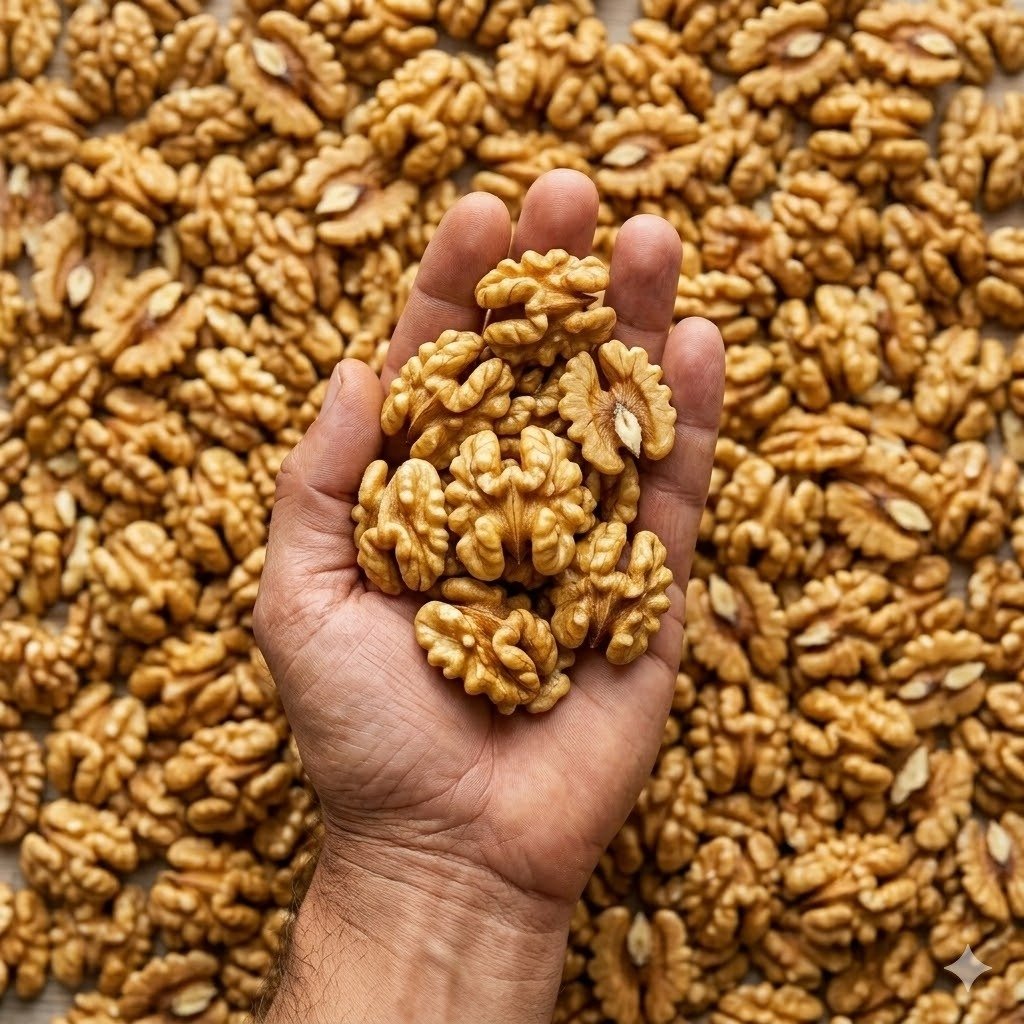
About a handful (if you have average-sized hands)
Nutritionally, one ounce provides:
185 calories
18g fat (of which 2.5g is ALA omega-3)
4g protein
2g fiber
0.4g sugar
Most studies showing health benefits used this amount—about 1 ounce (28-30 grams) daily.
Can you eat more? Yes, but be mindful. Two ounces (370 calories) is fine occasionally, but daily double portions might contribute to weight gain for some people. The benefits don’t double with double the portion. More is not significantly better.
Can you eat less? Some benefits still accrue at half an ounce (7 walnut halves) daily, but the strongest evidence supports the full ounce.
A practical note: Don’t obsess over counting walnut halves. If you eat a handful most days, you’re probably close enough. The goal is consistency, not perfection.
How to Choose, Store, and Eat Walnuts
Choosing the Best Walnuts
Raw, unsalted, unroasted are best. Roasted nuts (even dry-roasted) have fewer antioxidants. Salted nuts add sodium you don’t need.
Whole walnuts (not pieces) stay fresher longer. Pieces have more surface area exposed to oxygen, which causes rancidity.
Look for walnuts that smell sweet and nutty. If they smell like paint thinner or bitter, they’re rancid.
Proper Storage (This Matters More Than You Think)
Walnuts are high in polyunsaturated fats. Those fats oxidize (go rancid) quickly when exposed to light, heat, or air.
Shell-life: Unshelled walnuts in the pantry: 3-6 months.
Shelled walnuts in the pantry: Only 3-4 weeks (really—they go rancid fast).
Shelled walnuts in the refrigerator: 4-6 months.
Shelled walnuts in the freezer: 1-2 years.
My advice: Buy shelled walnuts from a store with high turnover. Store them in an airtight container in your refrigerator. If you buy in bulk, freeze half. Rancid walnuts taste terrible and lose their health benefits.
Easy Ways to Eat More Walnuts
You don’t need to eat them plain (though I do—I love the bitter-sweet crunch).
Breakfast: Chop and sprinkle over oatmeal, yogurt, or cereal.
Salads: Toasted walnuts are incredible on salads with apple, blue cheese, or dried cranberries.
Baking: Add to banana bread, muffins, or cookies (reduce sugar slightly).
Trail mix: Mix with dark chocolate chips, unsweetened coconut, and seeds.
Pesto: Use walnuts instead of pine nuts (much cheaper, still delicious).
Overnight oats: Stir in chopped walnuts before refrigerating.
Sautéed vegetables: Toss with green beans or Brussels sprouts.
Potential Downsides (Honest and Balanced)
No food is perfect for everyone. Here’s what to know before you start eating walnuts daily.
1. Calorie density. At 185 calories per ounce, it’s easy to overeat. If you’re trying to lose weight, measure your portion. A “handful” can mean 400 calories if you have large hands.
2. Digestive issues. Some people experience bloating or diarrhea from walnuts. Start with a smaller portion (4-5 halves) and work up.
3. Allergies. Tree nut allergies are serious. If you’re allergic to walnuts, obviously avoid them.
4. Oxalates. Walnuts contain oxalates, which can contribute to kidney stones in susceptible people. If you’ve had calcium oxalate stones, talk to your doctor before eating walnuts daily.
5. Rancidity. As mentioned above, rancid walnuts are not just unpleasant—they contain oxidized fats that may be harmful. Store them properly.
6. Blueberry-walnut syndrome (real thing). Some people experience a strange sensation—tingling, numbness, or sore throat—when eating walnuts with certain fresh fruits (blueberries, apples, grapes). It’s rare and harmless but uncomfortable.
What About Walnut Supplements? (Skip Them)
You’ll see walnut oil, walnut extract, and walnut supplements online. The research is clear: these don’t provide the same benefits as whole walnuts.
The fiber, polyphenols, and protein in whole walnuts work together synergistically. Isolating one component (like the oil) misses the point. Eat the nut, not the supplement.
Frequently Asked Questions
Can I eat walnuts every day?
Yes. The research specifically studied daily consumption. One ounce per day is well within safe limits for most people.
Are walnuts good for weight loss?
They won’t cause weight loss on their own, but they can support weight management by increasing satiety and replacing less healthy snacks. Several studies found that walnut eaters gain less weight over time than non-eaters.
Are walnuts better raw or roasted?
Raw is better. Roasting reduces antioxidant content. If you prefer roasted, do it yourself at low temperature (300°F for 10 minutes) to minimize nutrient loss.
Can I give walnuts to children?
Yes, once they’re old enough to safely eat solid foods (and no allergy). Walnuts are nutrient-dense and support brain development. Start with a small portion.
Are walnuts safe during pregnancy?
Yes. The ALA omega-3s in walnuts support fetal brain development. Most pregnancy nutrition guidelines encourage nut consumption.
Should I soak walnuts before eating?
Some people soak walnuts to reduce phytic acid (which can inhibit mineral absorption). The evidence is mixed. Soaked walnuts are softer and less bitter—try both and see what you prefer.
What’s the difference between walnuts and black walnuts?
English walnuts (the common grocery store variety) have a milder flavor and thinner shell. Black walnuts are native to North America, have a stronger, earthier flavor, thicker shell, and slightly different nutrient profile. Both are healthy.
A Warm, Encouraging Conclusion
Here’s what I’ve learned from researching this article.
You don’t need exotic superfoods. You don’t need expensive supplements. You don’t need to overhaul your entire diet overnight. Sometimes, the most powerful foods have been sitting in front of you the whole time.
Walnuts won’t cure disease. They won’t reverse aging. They won’t fix a bad diet. But if you’re eating a reasonably healthy diet, adding a handful of walnuts each day is one of the simplest, most evidence-based things you can do for your heart, your brain, and your gut.
And unlike a lot of health advice, this one is easy. You don’t have to cook. You don’t have to prepare. Just open a bag, grab a handful, and eat.
So here’s my challenge. Buy a bag of raw walnuts this week. Store them in your refrigerator. And every day for the next month, eat one ounce—about 14 halves. Put them on your oatmeal. Toss them on a salad. Or just eat them standing in front of the fridge.
After a month, notice how you feel. Do you feel different? Maybe. Maybe not. But you’ll know you’re doing something good for your body. And that feeling—that small, consistent act of care—adds up over time.
Now I’d love to hear from you. Do you already eat walnuts regularly? Have you noticed any changes? Or are you convinced to add them to your daily routine? Drop a comment below—I genuinely read every single one.
And if this article helped you see walnuts in a new light, please share it with a friend who could use a simple, science-backed health habit. A text, a link, a conversation. Good information is meant to be passed on.
Now go grab a handful. Your brain and heart will thank you. 🌰💚